Today at our staff meeting we had a visit from Celeste from the Crisis Team with the Ministry and we unpacked the term “trauma informed practice”. This is a neuro-scientific way of looking at behaviour focusing on the three sections of the human brain and their effect on behaviour. The Reptilian brain is the first part to develop in the womb and this can be affected by trauma to the mother whilst in the womb. Near brainstem, fight, flight or freeze response. The Limbic brain is the emotional brain, responsible for establishing relationships between people and social interactions. The Neo-cortex is the thinking brain, responsible for critical and creative thought and the part of the brain where academic learning takes place.
The brain can be affected by Adverse Childhood Experiences, or ACE. Significant caregivers either passing away or being incarcerated, drug and alcohol abuse, separation and divorce all count as ACEs. Neglect, especially emotional neglect, is one of the greatest ACEs as it affects our ability to form relationships with others. Research has shown that when a baby cries, the red part of the brain lights up, highlighting the need for basic needs, such as food warmth and physical comfort to be met. When the baby has been picked up, comforted etc the primary need has been met and the other parts of the brain begin to be activated. Mothers affected by post-natal depression can contribute to emotional neglect of their children.
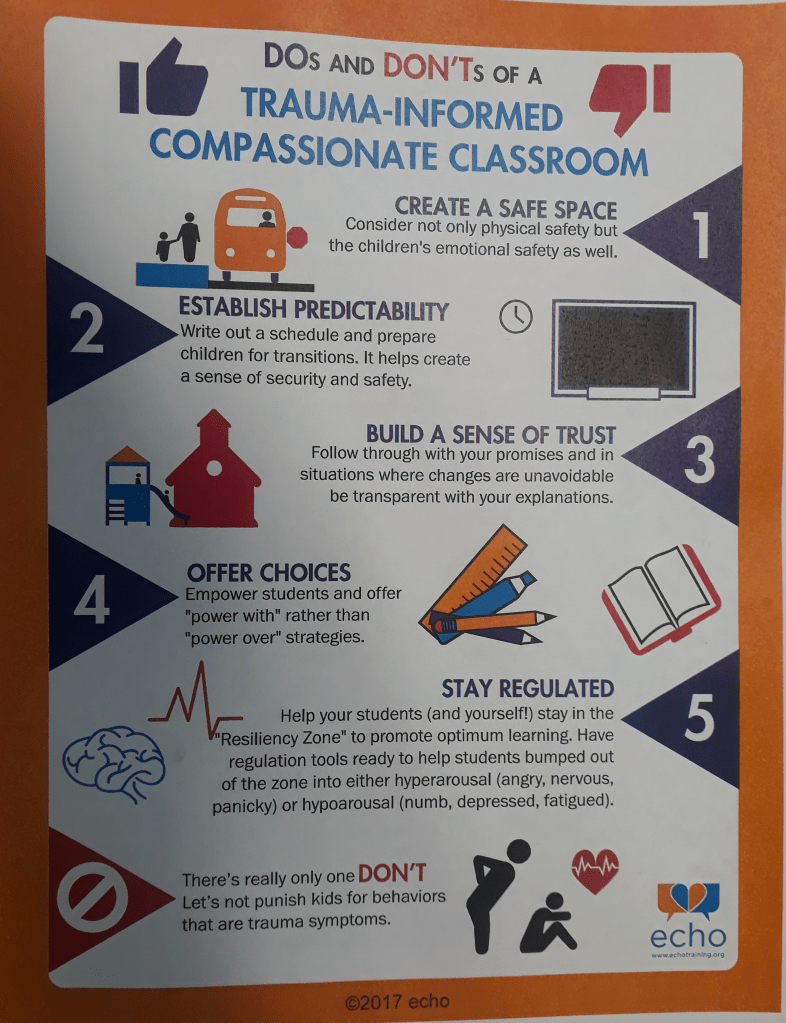
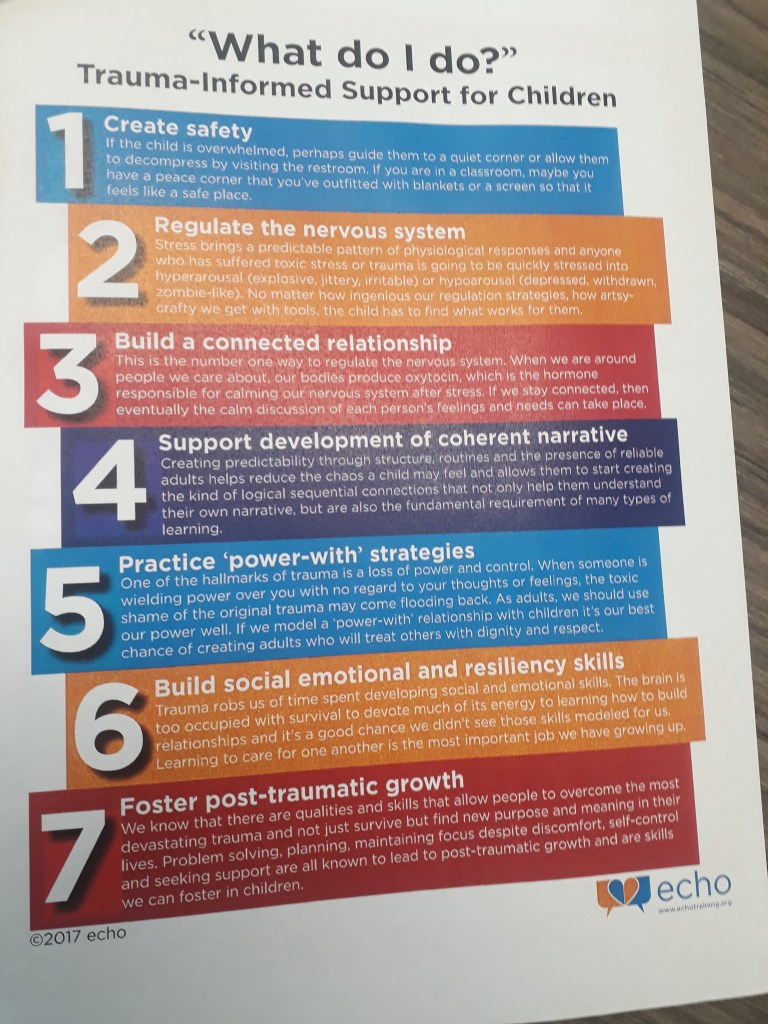
Two things to help children who have experienced trauma: Relationship and Safety. Build a relationship with the child and create safe space. Celeste used a glitter jar analogy- when upset or stressed the brain fires in the survival brain area (see picture below). Wait for the glitter to settle, it takes time to calm down. The red part of the brain can take up to two hours before it can settle and “de-glitterise”. You need to step back and give the child some space and time in order to settle.
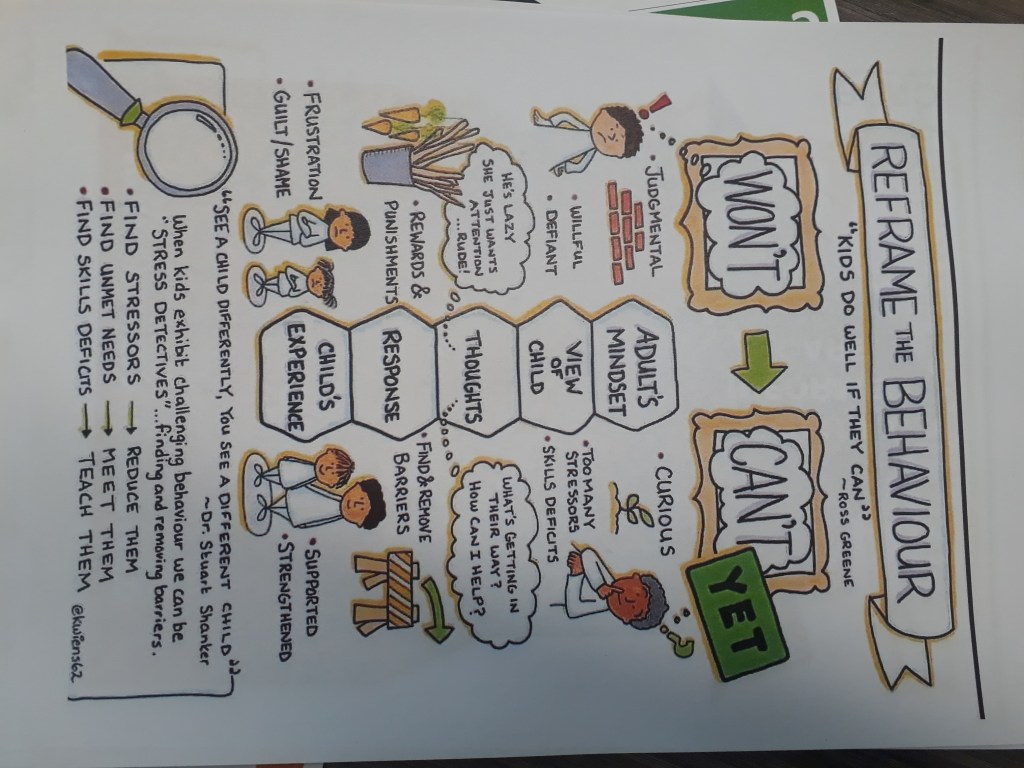
Children who have experienced trauma also need to have a safe person- someone who they trust who they can go to in times of stress. With positive interactions that happen consistently, new brain pathways can be grown- the brain itself can grow new links between actions and thoughts so that the child can learn new behaviours. Schools have reported that behaviours will escalate before they subside as children try to test out the ‘safe person’.
Mindfulness practises can be helpful first thing in the morning to settle and ‘deglitterise’ the brain before any ‘green brain’ neo-cortex learning is attempted.
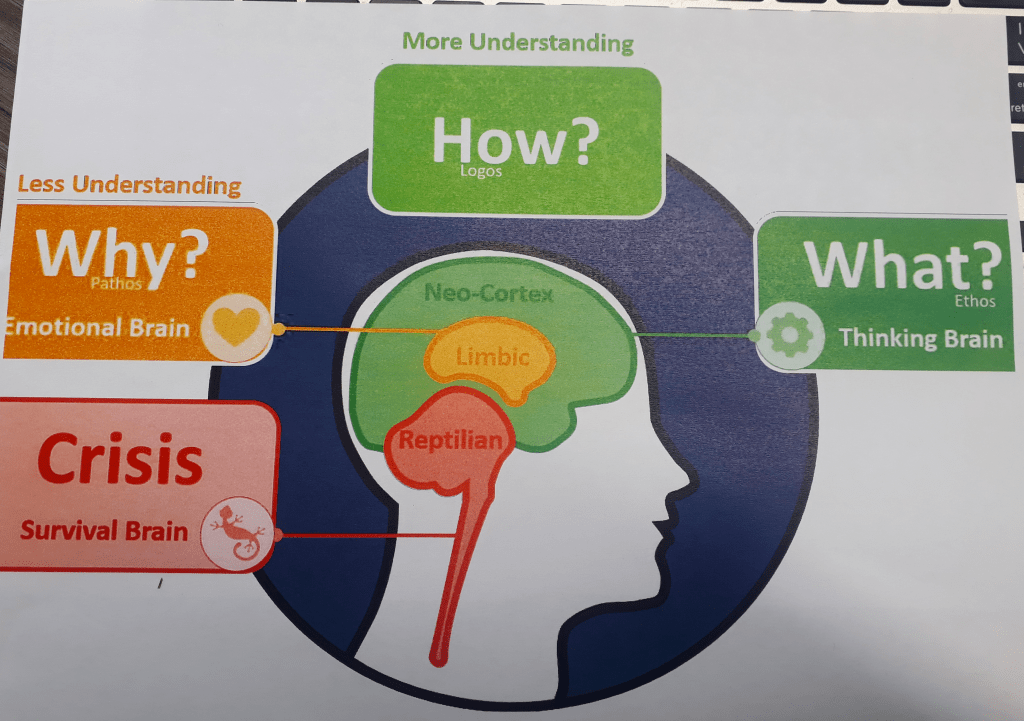
The three sections of the brain.
 Learning Through Teaching