The Politics of Learning From Home

The Coronavirus has exposed many holes in our current society, none more gaping than the access to technology experienced by thousands of New Zealand students who are unable to actively participate in education, either in class or remotely, due to a lack of electronic devices or internet connection. The New Zealand Government announced arrangements for 17,000 Chromebooks or iPads to be shipped to homes across the country to attempt to address this glaring disparity, however it remains a point of contention that adequate resources were not available within the education system prior to this global emergency.

Recent television news reports attempting to show the brighter side of The New Normal have often focused on higher decile schools and their response to the crisis: small bubbles of happy children in classrooms adequately supplied with digital technologies and the vast majority of their community ensconced at home, learning remotely with their teacher just one mouse-click away. Sadly, this is not the reality for many New Zealand learners.

Education in New Zealand is currently at its most unequal. Some children are thriving in this new online era, uploading pictures and videos of themselves completing a learning task, communicating daily with friends and teachers while being tutored by supportive family members. Others may have to share technology with siblings and compete for bandwidth with harried parents working from home. There are those without devices who are completing hard copy home learning packs supplied by the government, and there are yet others for whom home is not even a safe place, let alone one where learning can take place.

Teaching colleagues have spoken during the lockdown of how difficult it is to make contact with students and their families outside the physical bounds of the school, as bubbles migrate and regroup under the different levels and lack of access to technology limits communication between home and school. Administrators and teaching staff try to make contact with a family using a mobile number that has now been disconnected, or visit a home only to discover that no one now resides at that address. The most difficult times for a society are felt even more acutely by its most vulnerable.

Inequality within the education sector has long been acknowledged, but it seems to have been treated as just another sad fact of life. In my first teaching position at a decile one school in Mt Roskill, the staff decided to hold a school disco to fundraise for sports trips. After the teachers sourced the sound equipment, set up the speakers and spent two afternoons decorating the dilapidated school hall we raised just over $300 from the entry fees and the sales of donated food. My next position was at a decile eight school where the disco, quiz nights and other fundraising initiatives run by the highly supportive PTA raised over $2000 each. The contrasts between those schools were stark: a new swimming pool and a dedicated computer suite in the higher decile school; an absence of swimming lessons, and 28 dated laptops on trolleys to service the entire school in Mt Roskill.

Disparities in education due to disparities in welfare cannot be completely redressed by investment in schools alone, but this must be part of the solution. Currently we seem to be operating two curriculums within the same country, one digital, connected and future-focussed, and one paper-based, reactive and isolated. Centralised funding of digital devices would alleviate pressure on schools struggling to find capital for technology while also providing staffing and curriculum resources, perhaps a nationwide scheme for schools similar to the current laptop provision for teachers could be enacted to ensure a 1:1 ratio of devices to children in classrooms.

As the world develops a new modus operandi in the the wake of Covid-19 and more and more companies embrace the option of remote working, questions may be raised about how education will be altered in the coming years. Virtual-classroom learning has become a booming industry in China, where one tutor connects remotely with classes of fee-paying students at mutually agreed times. In this situation, the teacher becomes a contractor, choosing their own working hours in a gig-economy manner similar to an Uber driver. Perhaps in the future, remote learning could be adopted as a kind of outsourcing, a way to semi-privatise education as the running costs are passed onto the domestic household.

One thing that has become clear is how vital it is to have a physical space to act as a focal point for communities. In the good times, a school is a place where friendships are made, both between students and between their families. There are connections born out of rites of passage: the first day of school, sports teams, school plays, sitting exams. In times of hardship, schools can often be the only avenue of support, connecting people with services they could otherwise not have accessed.

Hopefully this crisis will enable a realisation amongst those with political power which will be remembered long after the lockdown ends. Finance Minister Grant Robertson’s pre-Budget speech today called on people to “acknowledge that things weren’t perfect before Covid-19”, and that we should not squander the opportunity to use the economic re-set of the Coronavirus to address these long-term issues. There is so much potential for positive social change at this moment, the zeitgeist tangible in the teddy bears in windows, fuelled by the message “Be Kind”. Let’s hope it lasts.
Online Guided Reading

During the Covid-19 lockdown I participated in several online webinars, one of which was a session run by guided reading expert Hilton Ayrey. I have followed Hilton Ayrey since my first years of teaching, as I was attracted to his Story Bytes series of guided reading texts. These texts consist of 4-5 paragraphs of writing which are differentiated by the addition or substitution of vocabulary in varying degrees of complexity, hence the same topic or story can be read at a range of different reading abilities.

At the beginning of the webinar, Hilton prefaced the session by stating that he was not sure whether this online approach would be suitable for all teachers, and that he had in fact received feedback already from teachers who felt trying to hold a guided reading session online during this lockdown period would be too difficult for many students. As he was also producing content in a time where the situation may change with little notice, he acknowledged that by the time he had perfected a lesson plan, the lockdown may be over and it may be business as usual, therefore he asked us to assess whether this system could be used by a Teacher Aide in class instead.

The first thing he covered was the administration that needs to be done before a lesson can begin: sharing the materials before students arrive by having the text clickable in a link, establish protocols such as having microphones on mute, having hands up signals etc, the sort of classroom management most teachers would be familiar with but in a virtual environment. The four paragraphs of text were displayed on a powerpoint which presented one paragraph at a time, and then one sentence each from that paragraph on the next few slides to focus the group clearly on the text at hand.

Hilton’s guided teaching model is 20% of time spent explicitly teaching, and 80% of time spent on independent practice, however it is not a straight 20% front-loading, 80% go-away-and-practice, as that ratio first implies. Rather it is a rotation of explain, model and guided practice throughout the lesson. Hilton will ask for roadblocks- unfamilar words which may impede comprehension, and then offers students a chance to clear those roadblock themselves or offer a solution to another’s problem. Ayrey says it is important that not a lot of time is spent on clearing roadblocks as this can eat into lesson time- one attempt from the student or one attempt from a peer, and then the teacher can give the information so that the reading can progress.

The lesson sequence is broken into four steps: 1. Teacher modelling, 2. Student reading practice, 3. Explanation of what has been read, 4. Bridge back to the story. The goal is to get through one paragraph in six minutes, so pace is important. One benefit of doing online guided reading is that as a teacher you do not need to worry about keeping the rest of the class on-task while working with a group!

After going through the learning intention and success criteria, we began with a reading of a sentence: The duck landed on the water. Hilton pointed out that the Explain part of the lesson sequence needs the student to demonstrate that they really understand what the text means, not merely retell it. In this case, restating “the duck landed on the water” would not constitute a good explanation, students need to make reference to the fact that the duck had been flying and that it had come to rest on the surface of either a lake or a river, not a puddle as in reality this would be too shallow for a duck to land on.

We then began reading the first paragraph of the text in our heads, Hilton read the first line aloud and modelled how to break down the sentence and explain what each bit meant using the phrase “I think that…” We then had to decide whether we thought he had understood the text or not. We then read a sentence aloud together and one of us offered an explanation of what it meant. We then each took turns reading a sentence aloud and explaining what it meant using “I think that…” There was no interjections from other students or the teacher at this stage.

At the end of the paragraph the teacher may ask whether there are any roadblocks, difficult words or idioms that a reader may not be familiar with. The reader is offered a chance to guess at the meaning, before it is opened up to the rest of the group to try. Hilton drew attention to this part, only one peer should be given a chance to clear the road block, any more and the time spent on it is too long. Roadblocks should be cleared ideally within 20-30 seconds as the purpose of the reading is not to spend a long time teasing out the meanings of words.

Finally, once all the sentences in the paragraph have been read, Hilton selected a sentence from the paragraph and gave us two minutes to convincingly explain what it was about, with points being given either to us as a group or to him if we couldn’t explain- a good strategy for engaging participation. He broke the sentence down into small chunks and we explained each bit until we had successfully explained the entire sentence. For instance, the sentence “Usually he would wade in and his heavy body would sink to the bottom of the river” would be broken into parts “Usually he would wade in”, “wade in”, “His heavy body would sink”, “Would sink to the bottom”. After we had explained the paragraph, Hilton asked for a prediction about what would happen next to bridge the discussing back to the story again.

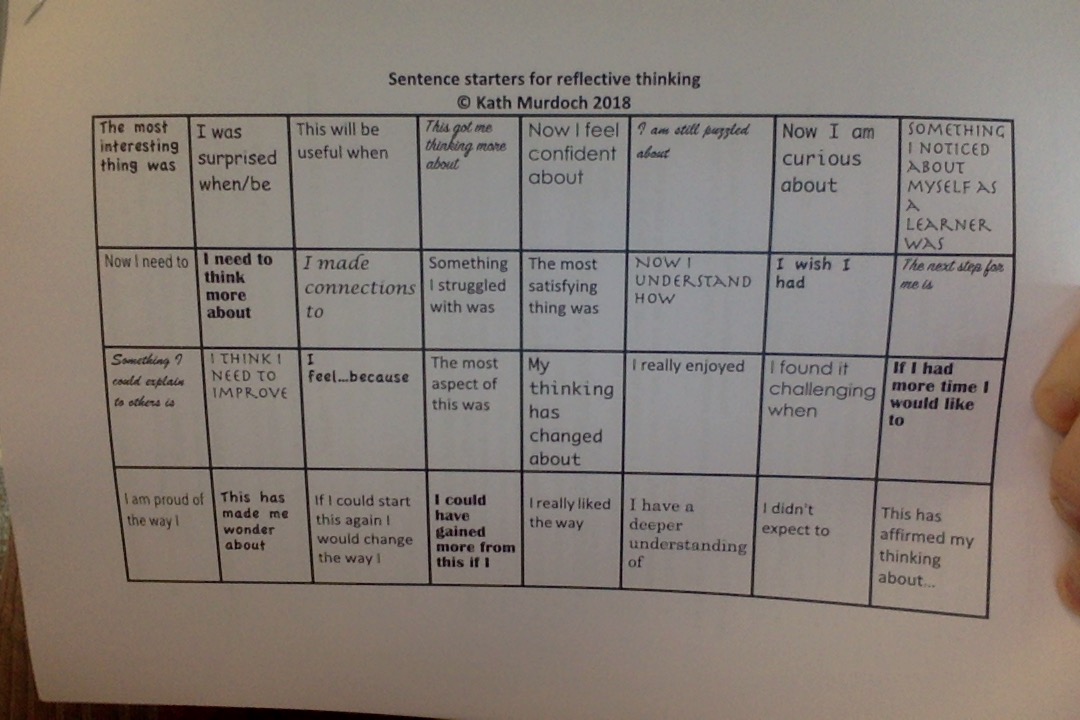
At the end of the session he asked us what we had been learning to do (Unpacking sentences), why we had been doing that (training our brain), whether we felt we had become better at this, and how we knew that we had become better. As a class teacher I am aware of the benefits of reflection on learning and self-assessment, and in future I would make more of an effort to include a reflection and self-assessment like this at the end of a guided reading session.

Gateway Assessments

The RTLB Service is involved in the Gateway Assessment process run by Oranga Tamariki and the Minstries of Health and Education. This is where a child is entering care and new assessments need to be made to support their transition. Every cluster must have a Gateway Coordinator, someone whose role it is to collate the information for the process. Today two RTLB from our cluster who have Gateway coordinator experience explained the role and the procedure when Gateway is being used.

The RTLB support the SENCO, class teachers and schools to complete the Gateway profile within 7 days from when the referral is received, however if the child is entering care (as opposed to being already in care) that window is shortened to 4 days. For the first month the RTLB works closely with the class teacher to support the child, similar to the standard practice sequence. The Gateway Coordinator will support the SENCO to make a separate RTLB referral on the database under the Gateway option.

The process can be lengthy; a health assessment must be done eight weeks after the data profiles are received by the social worker, and these can take up to six weeks to complete. Following that, an Interagency Services Agreement (ISA) meeting is held with representatives from Oranga Tamariki, the Ministry of Education, the Ministry of Health, the school and the RTLB Gateway Coordinator. The Liaison RTLB also supports the school to gather data for the profile and provides ongoing support during the subsequent RTLB referral.

There are particular privacy considerations under the Gateway process, meetings are held in a secure location and any correspondence should be conducted in accordance with privacy guidelines, for instance phone calls rather than emails, and password protection when sharing electronic documents.

According to Auckland District Health Board information, 50% of children in the Gateway programme are of Māori descent, 36% Pasifika, and 8% Pākeha/NZ European. Forty-six percent are in the age group of five to twelve years and 22% are aged 0-2. One of the RTLBs mentioned the relative drop-off in referrals over the past 12 months, and the link between this and the media frenzy following the uplift of a baby late in 2019. The comment was made that it is highly unlikely that the national rates of neglect, child abuse and factors relating to Oranga Tamariki involvement have decreased so dramatically to warrant such a reduction on it’s own, and that the drop in Gateway Assessments probably corresponds to a ‘more stand-offish’ approach by ministry officials.

How will this impact my practice?

In future, I will raise questions in my liaison meetings as to whether there are children in care within the school, and how their needs are being addressed. If asked to assist with a Gateway Assessment, I will be aware of the timelines and work to prioritise these cases. One important note was that in audits of Gateway cases, 30% of children were overdue for immunisations, and that even when this was discussed during the process and a GP visit recommended, it rarely eventuated. This resonated with me particularly as we are currently in a health crisis where the country is under lockdown due to a contagious illness. It is so important that these vulnerable children have adequate access to healthcare, whether that be vaccines, hearing and vision tests, dental care or other medical support, and that they see these services as accessible to them as they progress through life.

Children’s Commissioner Judge Andrew Becroft

In early February this year, our RTLB cluster held an annual hui (meeting) in conjunction with the Learning Support service from the Ministry of Education. One of the guest speakers was former Children’s Commissioner and Judge Andrew Becroft, who began by putting on a variety of T-Shirts with various slogans on them.

stating that as educators, we have a great responsibility and opportunity to change the country.

NZ has one of the most unequal education systems in the western world. HE named several things which have contributed to this situation: Tomorrow’s Schools and the shift from an egalitarian model to a competitive model, Unconscious Bias, Shortcomings in Teacher Education, Lack of understanding around neurodiversity, lack of cultural capability within education services such as the RTLB service, lack of suitable personnel to visit kura kaupapa, lack of pastoral care in schools to forge links between families/communities.

NZ needs to do better to understand the impact of Child Poverty, improve outcomes for Maori and Pasifika students, gain a better understanding of neurodevelopment diversity (not disability), be truly child centered, understand mental health issues and effectively address bullying.

NZ does better for it’s seniors than it does for its youth. In NZ, 3% of the over 65 population are in poverty, compared to 18% of people aged under 18. This is the biggest disparity in the OECD. In comparison, the UK has 6% of seniors living in poverty and 16% of under 18s.

Much of this can be traced to the 1991 budget when benefits were slashed. Superannuation increases were linked to wage growth, however benefits were not. This meant that as wages lifted so did the pension, but benefits did not rise to keep pace with this, leading to a growing disparity of incomes.

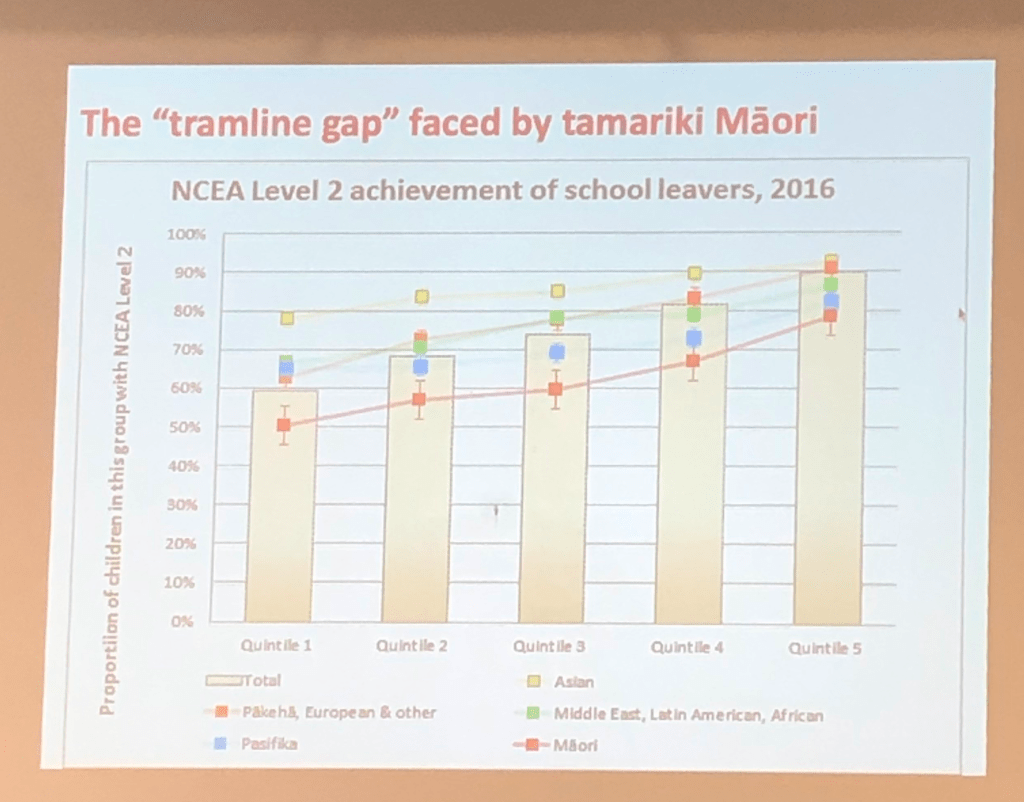
Judge Becroft also spoke about the “Tramline Gap”, the phenomenon shown on graphs plotting the achievement rates of different ethnic groups in schools of varying economic quintiles. It showed that although all children appeared to achieve better at higher quintile schools, the achievement gaps between those children who were Māori and those who were Pākeha remained the same. Although Māori student performance improved, they never caught up completely to students in the other demographics, the width between Māori and Pākeha was the same width at quintile one as at quintile five.

This trend could be linked to the other information Becroft mentioned later on, that in higher decile schools 8.4% of students had Special Assessment Conditions (e.g. Reader-Writers in examinations), however in lower deciles only 2.5% of students were offered these. This was interesting to me because it highlights the inequalities so prevalent in New Zealand schools, and reflects what I have witnessed myself in state primary schools.

Despite not being private institutions and theoretically open to any pupil, the state school system is directed by geography to include or exclude particular groups of students. School zoning has increased the disparity between demographics, as schools in more desirable areas outperform others in traditionally poorer or less desirable neighbourhoods. In the case of particular properties in Auckland, the original desirability of a neighbourhood to middle-class buyers has changed from being linked to proximity to work, transport and amenities, to being primarily driven by which schools they are in zone for. This has led to an increase in house prices and rents in certain areas of the city which are out of proportion to the national average.

A school like Auckland Grammar, for instance, which is nominally a state-run school is a community more akin to a private school, attended almost exclusively by students from wealthy middle-class backgrounds as they are the only demographic able to afford to buy into the area. A quick search on a property website shows huge discrepancies between the valuations of houses which are in-zone for Auckland Grammar compared to those which are not. In some cases, even houses on the same street can vary by close to a million dollars by virtue of being within the desirable catchment or not.

I feel strongly that schools in different areas have hugely varying ideas of what “high expectations” actually means. In one school, high expectations can mean achieving work that is at or slightly below the age-related expectation for that child or children, whereas at another school it would be nothing less than aiming for one or two years above.

This is not always attributable to deficit thinking or unconscious bias on the part of educators. Often, teachers in lower-performing schools are not aware of what their children are truly capable of, having not had the experience in other environments to make that comparison. In my first teaching position at a low-decile school, I was unaware of what the capabilities of a ten-year-old were. It was not until my fourth year of teaching when I moved to a high-decile school that I was presented with student work which was at a very different level to that which I had been accustomed to.

This relates directly to Judge Becroft’s findings on Special Assessment Conditions (SAC), as I believe many teachers do not recognise when a child would seriously benefit from help as they do not recognise them as being as far behind as they are. Looking back on my first class, a child who I believed was ‘average’, sitting comfortably in the middle of my low-decile, high English as Additional Language Learner class, was probably about 2 years below the age-expectation.

Also, I believe there is a lack of awareness about SAC amongst general teachers. While it is discussed within RTLB clusters, and recommendations made where it is deemed appropriate as part of the referral process, many class teachers do not know that it is an option, and do not make these allowances possible for students even when they are identified as needing additional help.

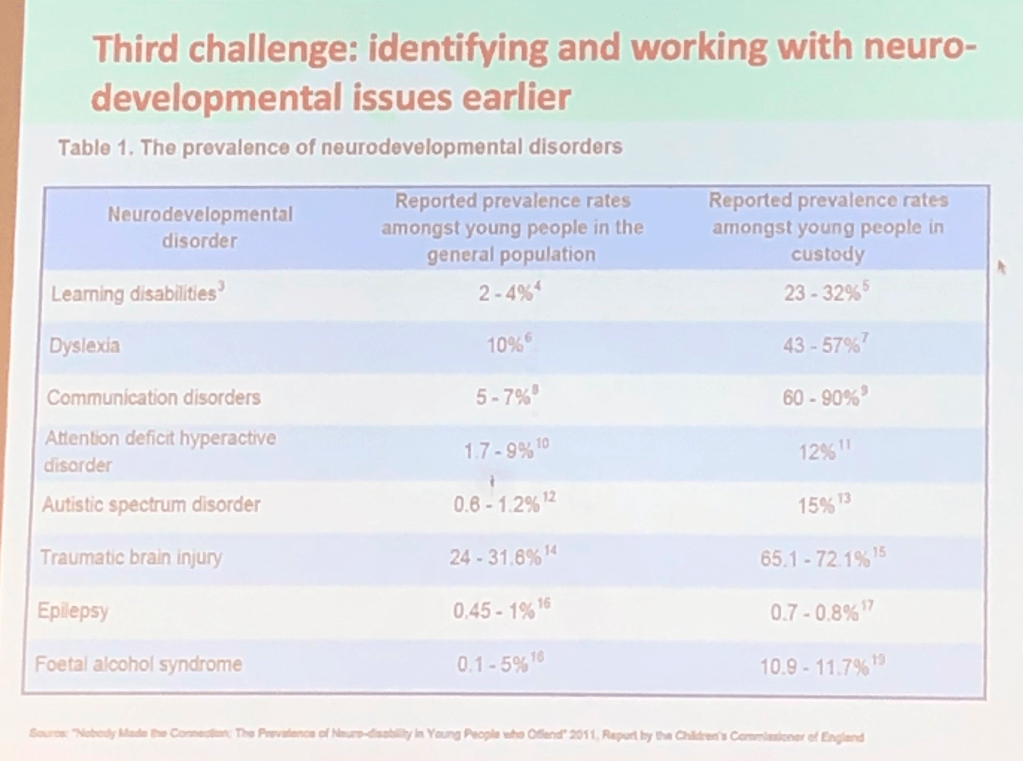
Another interesting point Becroft made was regarding the rates of Neurodevelopment disorders amongst young people in custody compared to that of the general population. As he said, no one had made the connection. Perhaps this was because many people see mental health in a compartmentalised manner, occasionally linked to education but separate from poverty and the justice system, instead of seeing all of these things as intrinsically tied together as part of a more general social malaise.

Pepeha and Whakatauki

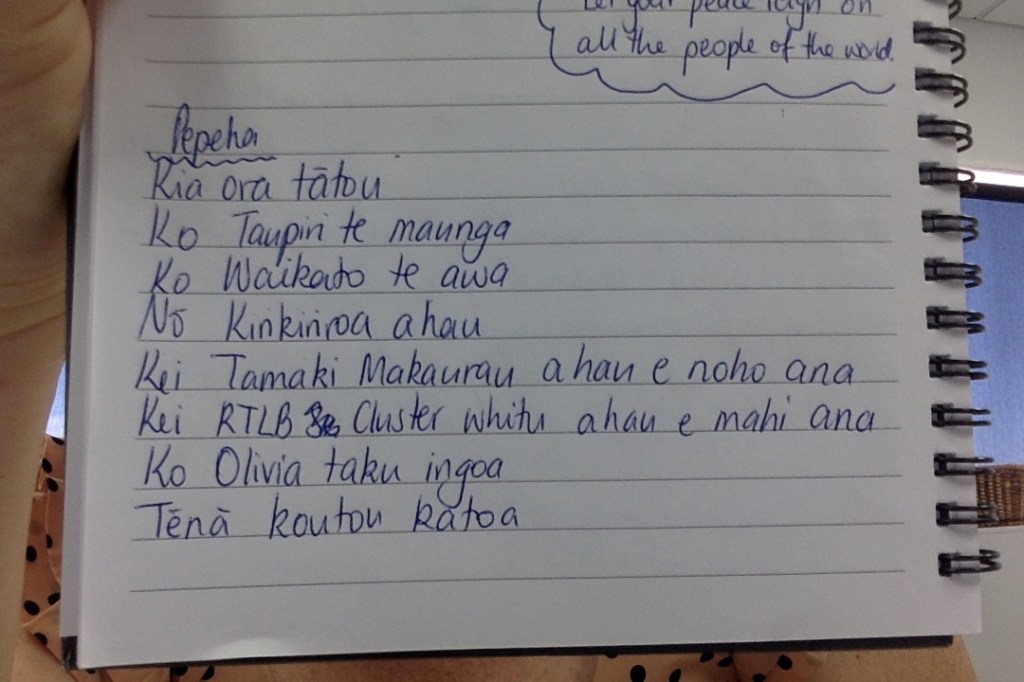
Our cluster has ben learning whakatauki, or Māori proverbs with the aim that we will be able to recite these by heart and use them where appropriate in our practice. I have taken the step of recording this month’s whakatauki, as well as a new pepeha that reflects my new position. I also recorded a karakia whakamutunga, or closing prayer which can be said at the end of a hui, or meeting.

Unfortunately I am unable to add the video or audio of the recordings on here, which is a shame. I have instead attached a photo of my pepeha. Hopefully by forcing myself to listen to my pepeha, karakia and whakatauki (like most people I hate the sound of my own voice!) I will be able to improve my pronunciation and memory.

Coaching

My new cluster has committed to developing the coaching skills of its members this year using the GROWTH coaching model, and this past week I have been fortunate enough to have several sessions on coaching as part of my RTLB training. Being new to both coaching and the RTLB service, I was eager to learn more about what coaching is, and how having this skill set can help me in my new position.

The role of the Resource Teacher of Learning and Behaviour is centred on conducting meaningful conversations with teachers, SENCOs and other education professionals with the objective of finding a positive outcome, and coaching aligns well with achieving this aim. A definition of coaching which seems to fit into the RTLB job description is: personalised learning where the coachee is actively involved in identifying, benchmarking and self-monitoring, with a focus on continual reflection.

In practical terms, for an RTLB using coaching could look like a conversation with a teacher being supported where the teacher’s strengths are first recognised and stated, e.g. “The way you ignored lower level disruption and focussed on addressing key behaviours was effective”, and the RTLB encourages the teacher to reflect back on what they believe is working in their practice while keeping the conversation strengths-based and focused on finding solutions.

It is important to keep the conversations on track, for instance not focussing on the child’s behaviour but what the teacher is doing about it. Fixating on past events or negative present circumstances will not be productive, it is necessary to bear in mind that the meeting is not an outlet for the teacher to let off steam about the current state of affairs, but an opportunity to move the situation forward in a positive and constructive manner. Do acknowledge what the teacher is saying, but redirect the trajectory of the conversation towards a more productive outcome. In practice, useful phrases such as “Yes, we have discussed this before. Why do you think this keeps coming back?” or “why is that important to you?” can help to reframe the discussion and encourage reflective thinking.

We ran a role play in this session where we had one coachee, one coach (me in this instance) and an observer to provide feedback at the end of the role play. In my role of coach I had to ask a series of questions, however I found it was tricky to pick the “right” question, and also to judge when was the best time to ask the next question, as I didn’t want to stop the flow of talk from the coachee at a point where they may be approaching self-reflection. Sometimes I would be about to ask a new question when the coachee would add a further comment, so I felt it best to hesitate a second longer than perhaps I would in a “normal” conversation.

The feedback I received was positive, in particular it was felt that I had done well in seeking to pinpoint what the problem was by asking “just to clarify, do you mean…” and rephrasing what the coachee had said. In future, I think I would try to speak even less, and focus more on listening so that I can paraphrase the coachee in a way that helps them to clarify their problem and direct them towards a reflection on it.

Using Coaching Beyond Appraisal: Advanced Coaching Practice.

In another session we discussed the differences between coaching, mentoring, training and therapy in order to further clarify what coaching “is”. Research (which I have not copied down the references for) has shown that unlike training, where information is delivered in a one-off, top-down method which results in approximately 10% of the new skill being understood, coaching with follow-up increases the understanding of a new skill by 95%.

The use of scaling questions, for example, “on a scale of one to ten, rate yourself as …” are common in some areas, and are followed up by further questions such as “what got you to that point?” which encourage coachees to think back on their own experiences and draw out important points.

We also discussed the Phases of Learning to Coach, which consist of: Learning the Core Skills, Practising the Techniques, Building the Performance of Coaching, and Gaining Proficiency. An underlying tenet of coaching is that the coach does not necessarily need to have a deep content knowledge of the subject they are coaching on, the important part is that they listen well and ask the right questions to cause the coachee to think more deeply.

Coaching Skills

In this session we learnt about how coaching is about creating optimism and building hope for the coachee. Having warmth, attentiveness and positivity are crucial for creating a successful relationship between the coach and the coachee.

We made some goals for the future, my next step to becoming a confident coach is to become more familiar with questions by spending two minutes a day reading and reflecting on the coaching questions we were given. My next step in using coaching in my casework will be observing and identifying how my coworker uses coaching in their meetings and reflecting on their practice.

We made notes on listening skills, for instance how much are we really remembering? We often miss important information when listening, so it is necessary to ignore other conversations around you, make eye contact and put your own thoughts on hold, don’t just think about your own response. Being able to show that you are listening without verbalising your acknowledgement is valuable, so nod your head and smile or say ‘yes’ occasionally. When replying, see if you can paraphrase what they have said to let them know you have been paying attention, and don’t interrupt.

We observed two of our colleagues running a role play where one was coaching the other. Person A (the coach) began by complimenting Person B on their choice of goal and how well it relates to her practice. Person B then spoke about why they had chosen that goal, and elaborated on potential problems. Person A paraphrased what B had said, and over the next few exchanges I noticed that the coach reiterated a particular question, perhaps she was aware of something the coachee was not?

Questions such as “is there any other source of information?” raised the importance of looking for other options for support, and the necessity of getting the coachee to realise that they may need to make more than one plan for success. In asking Person B what else she could do, the coach makes the coachee reiterate her plan so that it is clear in both their minds.

The coach then asks the coachee to think ahead and predict any challenges, before reading out her notes to clarify the plan. The coach then numbers the steps, giving the opportunity for Person B to change the order, before finishing with “well done, good plan, we’ll meet again in a week’s time.”

I will try to keep this process in mind when shadowing and co-working my cases.

Phonemic Awareness

Today was my second day in my new role as a Resource Teacher of Learning and Behaviour, or RTLB as it is most commonly known as. This morning I had the privilege of attending a PD session about phonemic awareness, the ability of language speakers to identify the different sounds that make up a word.

The first part of the session introduced the Whanake programme, or Whanake te Kakano, which is a free support programme run by the RTLB service in Auckland aimed at helping struggling or developing readers to identify the different sounds that are heard in words- a gap which has been identified in many cases of reading difficulty.

The Whanake programme is very similar to another one run for profit in Auckland known as A Best Start, however goes further than this iteration by providing in-class modelling and follow up support for teachers involved in it.

We heard how often schools who have invested in expensive remedial reading programmes dismiss the Whanake model as being just another phonics system, however the Whanake programme is not about linking sounds to letters, which is the basis of many phonics courses. Instead, this system focuses on oral language and the print-free sounds of speech, identifying phonemes, and breaking up blends into their smaller constituents.

A video played to us demonstrated how a boy who could not say “swim”, was able to break down the word and add in the missing sound himself (in this case the “w”). He would use counters in a row to demonstrate the four sounds, in this instance s/w/i/m, and was able to identify that “sim” did not have the right number of sounds to be correct.

The programme, run by Gail Gillon in Christchurch, was supported by data which showed an improvement in literacy across the schools that participated, with one teacher sharing work samples of a student who went from a year behind to achieving at the national expected standard within a year.

Kapa haka

Today we had the privilege of having Matua Busby come into our school and lead our tamariki in some new waiata for Kapa haka.

It was interesting for me to hear the variation in the haka powhiri, for instance I am used to hearing “Hi ha, hi” before the call of “Toia Mai” (te waka). Matua Busby’s version adds in another “ha”, meaning it is chanted “Hi ha, hi ha… Toia Mai”. Next time I hope to ask him about whether this variation is due to regional difference (Auckland compared to the Waikato where I grew up). I found a link to a version similar to Matua’s here.

Hearing the familiar chants it was like second nature to begin the actions for Toia Mai, even though it has been a few years since my last kapa haka performance. After the practise I went over the words of the Ka Mate haka with my class as I had noticed a slight error in their pronunciation of the words, they were saying “hupane, hupane” instead of “upane, ka upane”, which is what Matua had taught them, but because of the bad acoustics in the hall the students struggled to hear him correctly. We also had a discussion about what the words meant in English, and I briefly talked about the legend behind how this was composed.


Kath Murdoch- Nurturing Agency Through Inquiry (Workshop for Learning Network)

Today our teaching staff attended a seminar by Kath Murdoch, whose book “The Power of Inquiry” has been the focus of our school’s professional development this year. We have been reading through the chapters during our staff meetings and endeavouring to incorporate the principles of her inquiry approach into our classroom practice. 

No inquiry classroom works unless there is a strong sense of community within a classroom, to demonstrate a way to build this Kath had us write a question on a card and move around the room asking different people the question before swapping cards with them and continuing around the room.

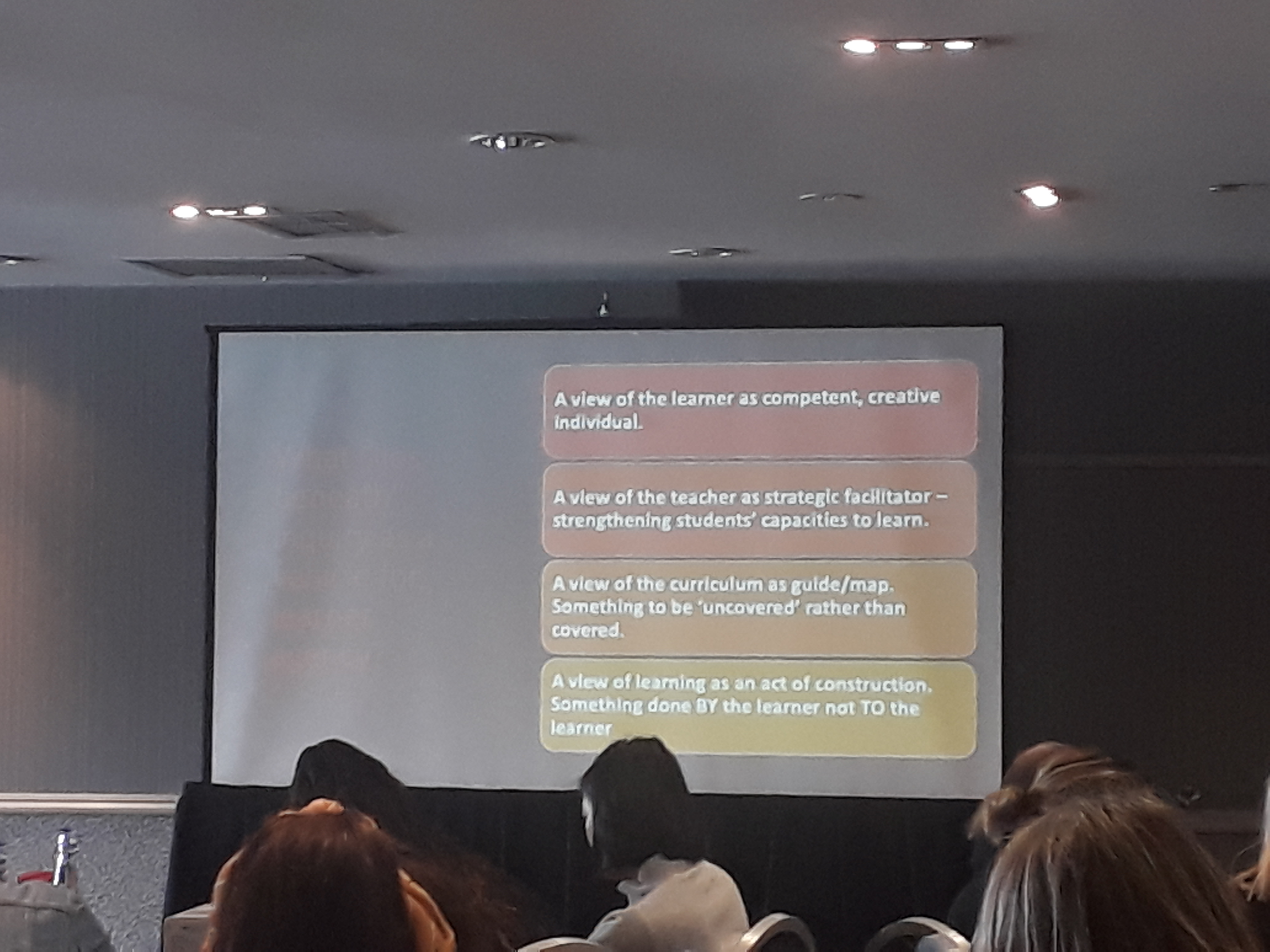
How do we see our role? What is a teacher? How do we see the child as learner? Kath Discusses Julia Aitken’s research around how some teachers struggle to adapt to MLE classrooms and philosophy and others do not struggle. She believes it is down to the vision of the teacher, how they view their role as teacher, how they view the learner, how they view the curriculum and how they view learning itself. (Video of child running, explorefund.org, related to Reggio Emilia, child already capable) We need to view children as able to take risks and view ourselves as able to step back and let them explore.

Kath discussed the way she viewed her role when she first began teaching and compared it to how she views her role now, and mentioned that over time every teacher’s view will change. She asked “what would you call yourself if the word teacher was taken out?” One of the things that get in the way of good inquiry teaching is the teacher’s view of their role (video of teacher unveiling a pile of objects and asking the children to think what it might be).

How do I view the Curriculum? A good inquiry teacher must know the curriculum well so that they do not need to get bogged down in the details, instead being free to adapt learning experiences to fit an inquiry model while still fitting within the framework. Seeing the curriculum as friend not foe, being able to ‘let it go’

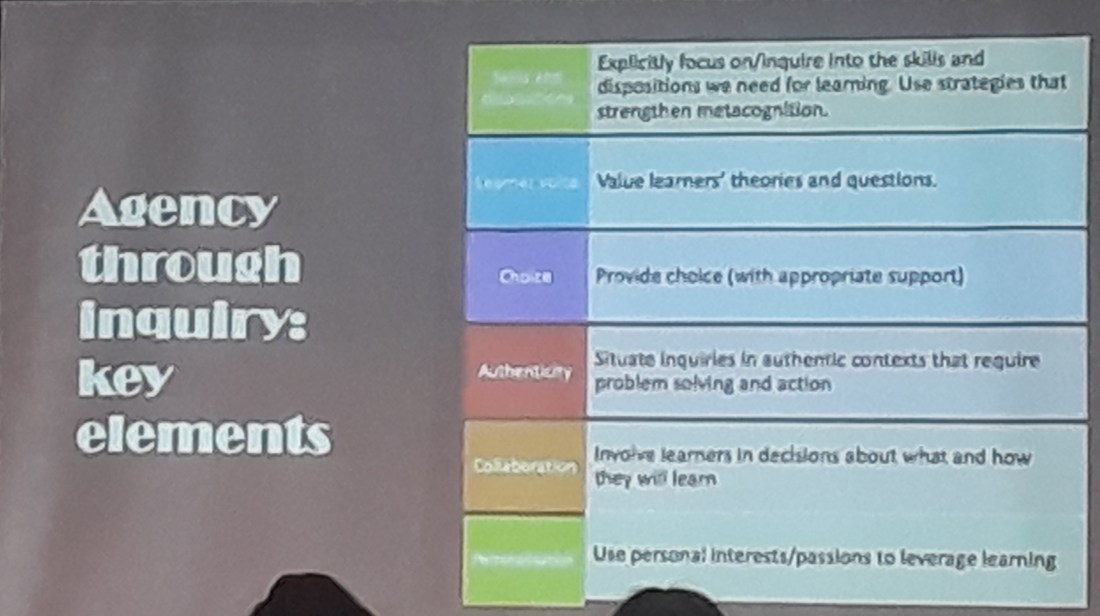
How do I view Learning? What “lies beneath” inquiry as a vehicle for learner agency? (photo of screen) How does learning take place? I feel that learning is often most effective when done through play and games, that learning often needs several approaches before it can be embedded, usually through a range of contexts and tailored to different learning styles. 

20190912_101806

Photo on 12-09-19 at 9.04 AM.jpg

“How does where you live impact how you live”. This question was used to explore science learning around time zones, seasons, night and day. She used the exmple of her friend texting her in the middle of the night (4am) saying that it was midnight. She asked a group of children how she could figure out where this friend could be.

Then generate quesitons about why there are different times in the world at the same time. Children come up with a theory about why there might be different time zones and see what they can find out through research. Children are aware that they are finding out more, and that it is ok if their theory is not correct. Children share their learning, recognise contradictions in each other’s theories, e.g. one girl thinking that night and day occur when the Earth turned vs a group of boys thinking the Sun and Moon swapped places in the sky. 

Children brought something to the table from their own prior experience. In one example, children sorted out the responses of the class to 5 different questions, for instance what are three things we can do to stay healthy? A group of children had the task of organising that data into charts, written statements etc and share back to the class. “We noticed that a lot of people thought this…” Here is an opportunity for children to feed into the inquiry and steer it in a particular direction.  This is an example of an activity/learning experience that I would like to try in my class.

Example of the Inquiry Diary: Grade 1 children looked at a rock with a stripe in the middle and wondered how the rock got the stripe. The teacher recorded all the theories of the individual children in a book, the ‘inquiry diary’. Students saw that all their ideas were valid and valued. The teacher write down the thinking “I think that the rock was scratched by a humpback whale…” Then a year 4 class was brought in and their contributions collected “I think that the rock is quartz because I have a collection of rocks at home…”

Giving learners responsibility: ONe teacher got children to write their goal for their learning on a whiteboard at the beginning of the lesson. Children wrote things like “I want to stay focussed on my work,” “I will check before I write,” ” I will be a collaborator” etc. During the lesson the teacher presses ‘pause’ on the session to ask the class to check back in with their original goals and comment on their progress.

Kath mentioned a school that had shifted its practice from traditional learning to inquiry based. The student voice showed a difference in how pupils viewed the question of “what makes a good learner?” Children write that they used to think that a good learner had a straight back and always put their hand up, showing that they saw good learners as linked with compliance. My question is: How does this compare to the PB4L model of explicit examples to improve/maintain positive behaviour in a school.

Video of PYP school: Organised classroom so children can find own resources, teacher often poses a question as the learning intention, e,g, ‘we are learning to identify shapes’ becomes ‘how can we identify which shape this is?’ Learning intentions and success criteria is often given as “we are learning to… we are showing our learning by….”


Split ScreeningPhoto on 12-09-19 at 12.10 PM

Photo on 12-09-19 at 12.24 PM

The idea behind this is so that children don’t come out of a maths lesson thinking they have only learnt about maths, there should be a skill they have learnt which can be applied to any context. Consider having an overarching inquiry question such as “what are we learning about ourselves as learners?”

Flipping the Learning

To model a flipped lesson, Kath used the question: What makes a powerful opening to a story? She gave a number of examples and asked us to choose one that stood out as powerful. She recorded our responses as to why we thought the opening was powerful and used that as the criteria, rather than giving us criteria to work from.

She played the video, “Sidewalk Flowers”, a video showing a book without words. We were then tasked with coming up with an opening line for this story. 

I do it, We do it, You do it: The traditional lesson sequence. Gradual vs immediate release of responsibility. Sometimes gradual release isn’t enough, sometimes immediate release is required for truly authentic learning to take place. 

What is effective feedback? Children need to have examples of effective feedback in order to give it to their peers, but how are those examples presented? Kath gave envelopes of strong and weak feedback to groups and asked students to rate each piece of feedback. Students then went to other groups and compared how they had rated feedback and discussed with each other.

Creating Authentic Moments: Video of Oakley Creek school from Boulder, CA.

Kath also showed us pictures of an example of spontaneous inquiry learning in a class where an arborist was cutting down a tree outside the window. The children wanted to watch and were granted permission to explore the topic, even inviting the arborist to come to speak to their class. Another example was the “Bin Chicken”, the plague of the ibis terrorising children in the playground. The resulting inquiry expanded to include creating ‘owls’ to put up around the school as a deterrent as well as a deeper appreciation of the plight of the species and the consequences of littering and human encroachment on natural habitats. 

One class organised their own trip to the zoo, including budgeting, scheduling the day, creating permission slips, arranging transport to the zoo and ensuring school protocol is followed. One thing which I am keen to explore is having my Year 5/6 class organise the school athletics day in week 3 next term.

Having broad enough questions is important to ensure a range of experiences can be incorporated within a particular theme. What does art teach us about history? What makes a great film/story? How do forces affect our daily lives? It would be good if the planning for this included a split screen, e.g. What am I doing as a thinker?

Often classes will do an individual inquiry as well as a shared whole-class inquiry, where students choose a topic linked to their own interests. This can mean a class has a plethora of inquiries happening across a range of contexts, for instance one student could be researching the suffragette movement and another the space programme. 

One activity Kath gave us was to walk around the room and read statements relating to agency, then share back at our tables what connections we had made with the readings, what ideas challenged our beliefs and what questions we had for the future. 

The last video was one of a toddler walking a labrador, leaving the dog and running through a puddle several times before returning to the dog, taking the leash and walking on. This metaphor shows the learner as the risk taker, able to explore tangents while the teacher waits patiently, supporting the learner in their personal endeavour. 


Trauma Informed Schools

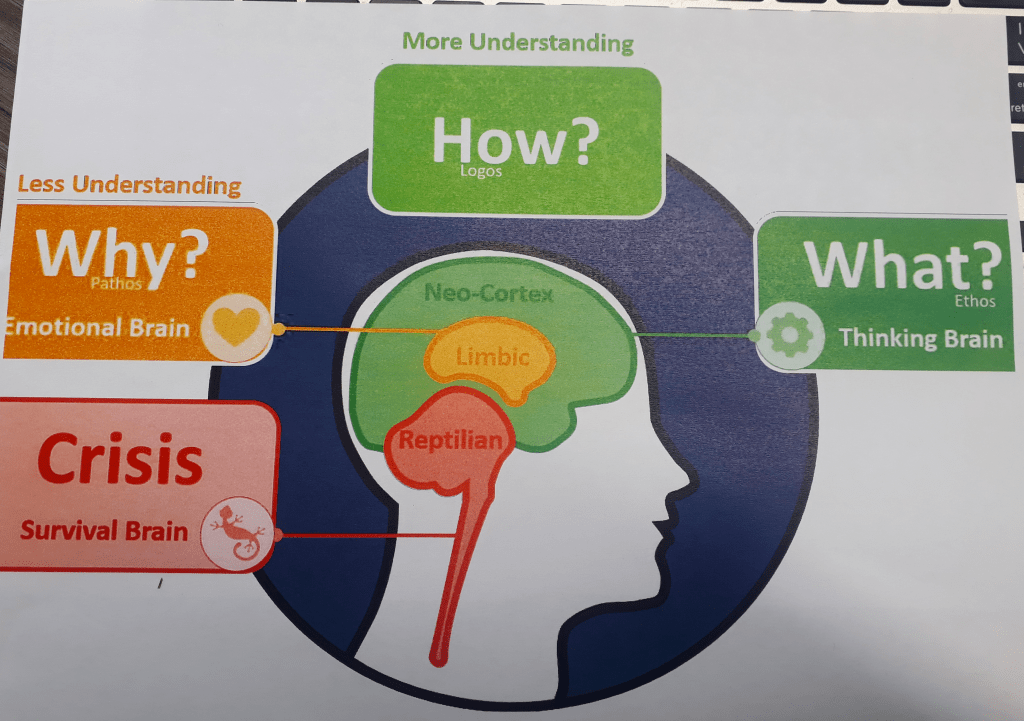
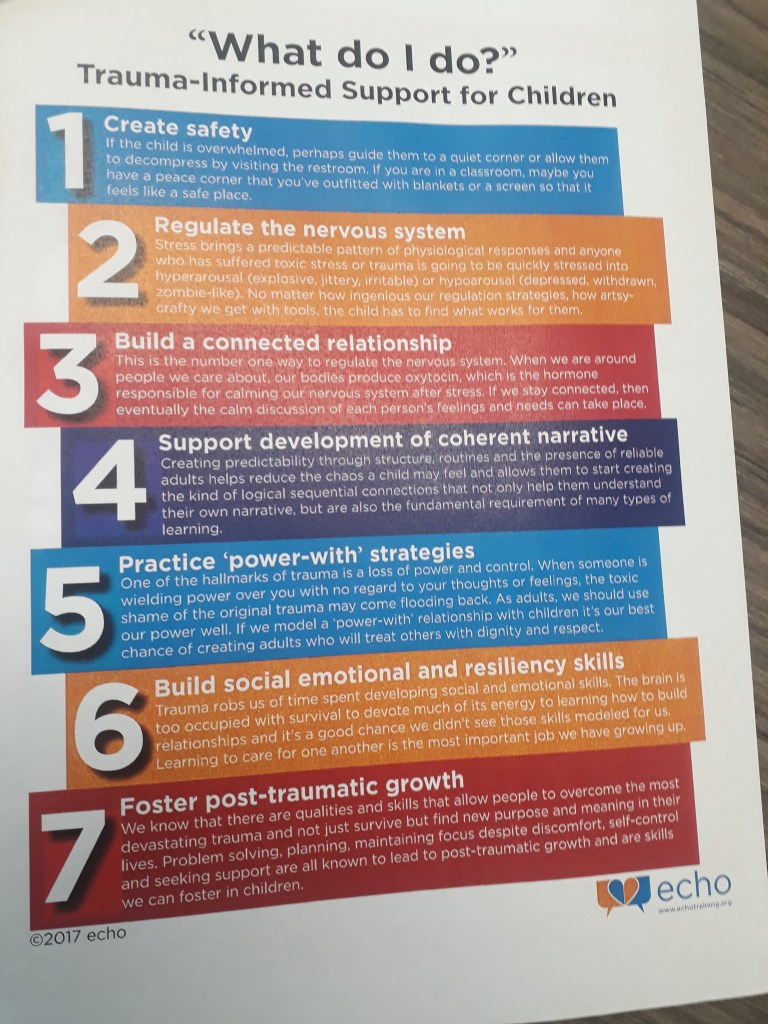
Today at our staff meeting we had a visit from Celeste from the Crisis Team with the Ministry and we unpacked the term “trauma informed practice”. This is a neuro-scientific way of looking at behaviour focusing on the three sections of the human brain and their effect on behaviour. The Reptilian brain is the first part to develop in the womb and this can be affected by trauma to the mother whilst in the womb. Near brainstem, fight, flight or freeze response. The Limbic brain is the emotional brain, responsible for establishing relationships between people and social interactions. The Neo-cortex is the thinking brain, responsible for critical and creative thought and the part of the brain where academic learning takes place.

The brain can be affected by Adverse Childhood Experiences, or ACE. Significant caregivers either passing away or being incarcerated, drug and alcohol abuse, separation and divorce all count as ACEs. Neglect, especially emotional neglect, is one of the greatest ACEs as it affects our ability to form relationships with others. Research has shown that when a baby cries, the red part of the brain lights up, highlighting the need for basic needs, such as food warmth and physical comfort to be met. When the baby has been picked up, comforted etc the primary need has been met and the other parts of the brain begin to be activated. Mothers affected by post-natal depression can contribute to emotional neglect of their children.

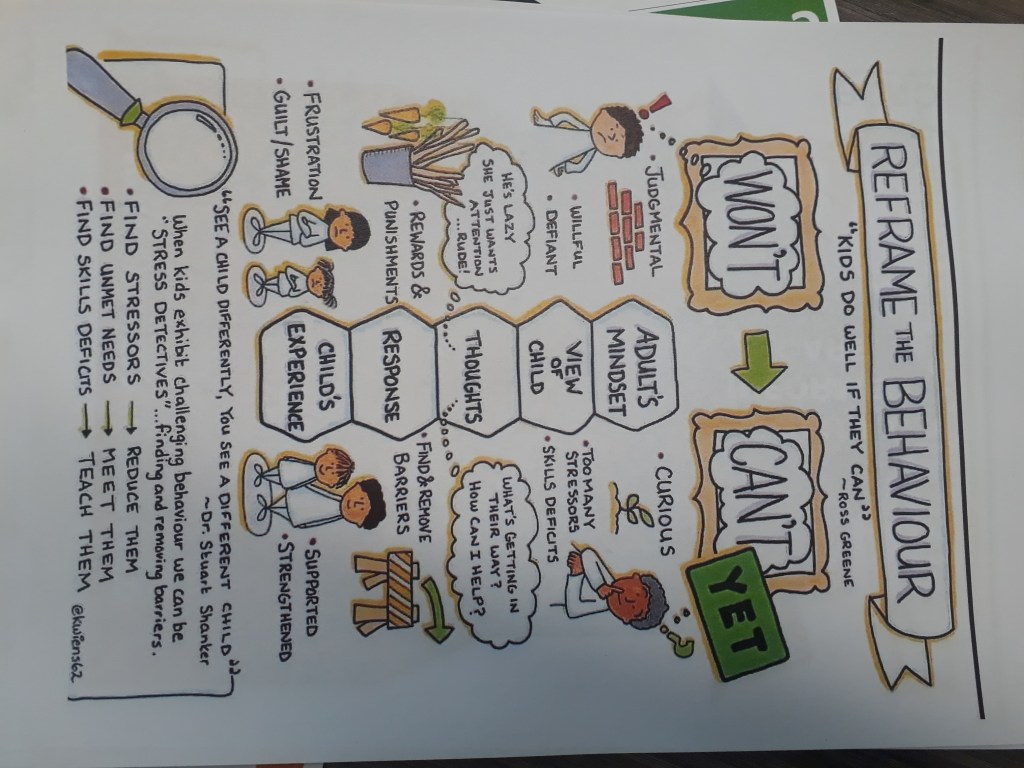
Two things to help children who have experienced trauma: Relationship and Safety. Build a relationship with the child and create safe space. Celeste used a glitter jar analogy- when upset or stressed the brain fires in the survival brain area (see picture below). Wait for the glitter to settle, it takes time to calm down. The red part of the brain can take up to two hours before it can settle and “de-glitterise”. You need to step back and give the child some space and time in order to settle.

Children who have experienced trauma also need to have a safe person- someone who they trust who they can go to in times of stress. With positive interactions that happen consistently, new brain pathways can be grown- the brain itself can grow new links between actions and thoughts so that the child can learn new behaviours. Schools have reported that behaviours will escalate before they subside as children try to test out the ‘safe person’.

Mindfulness practises can be helpful first thing in the morning to settle and ‘deglitterise’ the brain before any ‘green brain’ neo-cortex learning is attempted.

The three sections of the brain.